 简体中文
简体中文
 English
 Tiếng Việt
 Indonesia
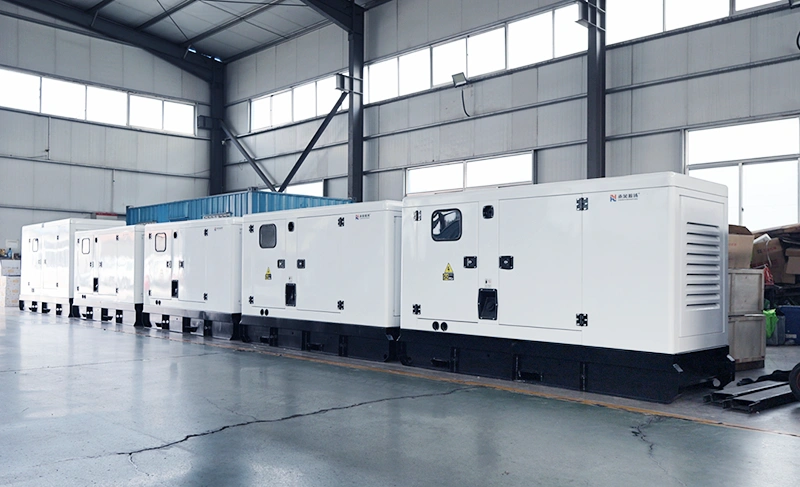
Standard diesel generator sets primarily consist of three components: a diesel engine, a generator, and a control system. There are two methods for connecting the diesel engine to the generator. One is a flexible connection, which uses a coupling to link the two components; the other is a rigid connection, which uses high-strength bolts to attach the generator’s steel mounting plate to the diesel engine’s flywheel. Most diesel generator sets on the market utilize a rigid connection. Once the diesel engine and generator are connected, they are mounted on a single chassis and equipped with various protective sensors, such as a coolant temperature sensor. These sensors provide operators with a clear indication of the diesel engine’s operating status. Upper limit values can be set for these sensors; when these limits are reached or exceeded, the control system issues an early warning. If the operator fails to take action at this point, the control system will automatically shut down the unit, enabling the diesel generator set to protect itself. Sensors serve to receive and provide feedback on various information. The control system of the diesel generator set is the component that actually displays this data and executes protective functions. The control panel is typically mounted on the generator itself—referred to as a backpack-style control panel—or placed as a standalone unit in the control room, known as a split-type control panel. The control panel connects to the generator and sensors via cables, displaying electrical parameters and diesel engine operating parameters, respectively. Additionally, the generator set is equipped with a chassis, coupling, radiator, and fuel tank; some models also include a muffler and enclosure.
Structural Analysis of Generator Sets